

Equipe: Low-dimensional oxides
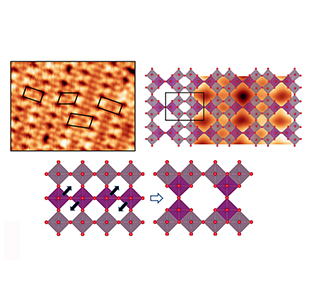
A Nanoscale Twist: Discovery of 2D Magnéli Phases in MoO₃ Films
The reduction of molybdenum trioxide (MoO₃) profoundly modifies its structural and electronic properties, making it a material of interest for numerous technological applications, ranging from (photo-)catalysis to optoelectronics, or electrochromic devices, among others. Although...

Charge carrier dynamics in ZnO nanopowders: influence of oxygen vacancy charge states probed by femtosecond transient absorption spectroscopy
THIS POSITION IS NO LONGER AVAILABLE Scientific description: Zinc oxide (ZnO) is a wide–bandgap (3.37 eV) n-type semiconductor whose optical and catalytic properties are largely governed by intrinsic point defects. Among them, oxygen vacancies (V₀) play...
Hot electron injection and defect control in Au–TiO₂ nanocomposites probed by ultrafast transient absorption spectroscopy
⇑ Click above ⇑ for a detailed description Description: Embedding plasmonic Au nanoparticles (Au NPs) into TiO₂ thin films enables visible-light harvesting through localized surface plasmon resonance (LSPR) and hot electron transfer to the semiconductor...

Physics Olympiad 2025 at INSP – 07/22/25
22/07/2025 @ 9 h 45 min-17 h 30 min – On Tuesday, July 22, 2025, INSP welcomes high school seniors from abroad. The program includes a guided tour of the laboratory, focusing on the following themes and platforms: Quantum optics Surface science Foams Manipulating light radiation and local magnetic field SAFIR Accelerator Pump probe experiments Magneto-acoustics Coordination: Sorbonne University Physics UFR To find out more
Physics Olympiad 2025 at INSP – 07/22/25
On Tuesday, July 22, 2025, INSP welcomes high school seniors from abroad. The program includes a guided tour of the laboratory, focusing on the following themes and platforms: Quantum optics Surface science Foams Manipulating...
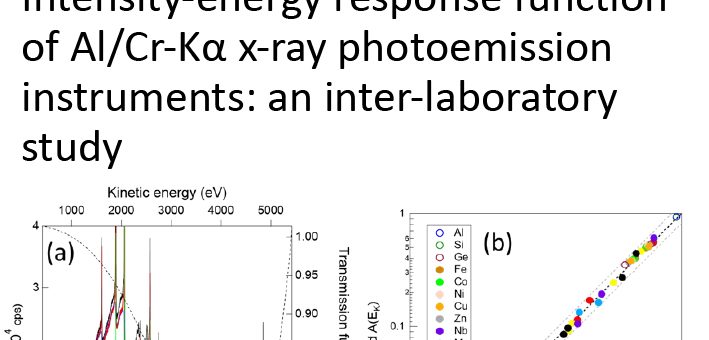
Towards a more reliable quantification in photoemission spectroscopy
X-ray photoemission spectroscopy (XPS) is a major technique in material science and nanoscience. Beyond its capability to identify elements and their chemical environments, it allows getting stoichiometries through core level peak areas. However, this...

